9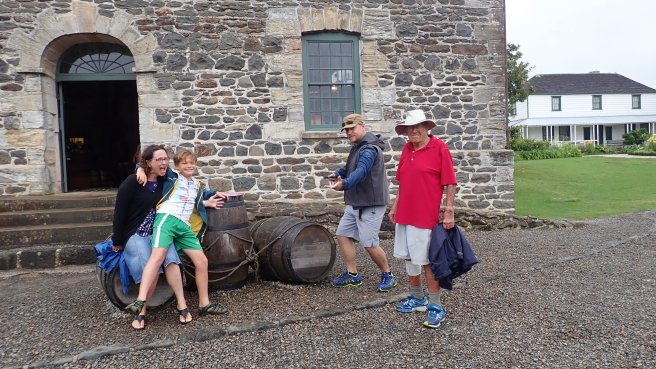
It was a rainy misty summer’s day and we found ourselves heading out to Kerikeri for the job run. A suggestion for a morning tea down the road turned into a history tour of the Maori settlement at the bottom of the Kerikeri inlet.
We learned of its importance as a meeting place for local chiefs and where wakas filled with Maori warriors set off to war from Kororipo or ‘ Swirling Waters’. Later it became a missionary settlement and orchards of apples, pears and peaches were grown there in rich volcanic soil, and William ‘Bee’ Cotton introduced the locals to bee keeping. It’s other massive claim to fame is the Stone Store – NZ’s oldest stone building built in 1836 – stop sniggering Britons!

Then whilst we were on a history roll we headed further south to The Treaty House and Museum at Waitangi in the Bay of Islands.

Max: ‘Aotearoa is New Zealand’s Maori name. It come’s from the words of Kura Marotini, Kupe’s wife meaning a long white cloud. The Maori people used waka taua (war canoe) to go into war, the biggest one being about 37metres or so long. The British formed the Treaty of Waitangi document which said they would have control over New Zealand sovereignty; the Maori chiefs had no idea how much they were giving away. There is lots and lots of debate about the Treaty.’
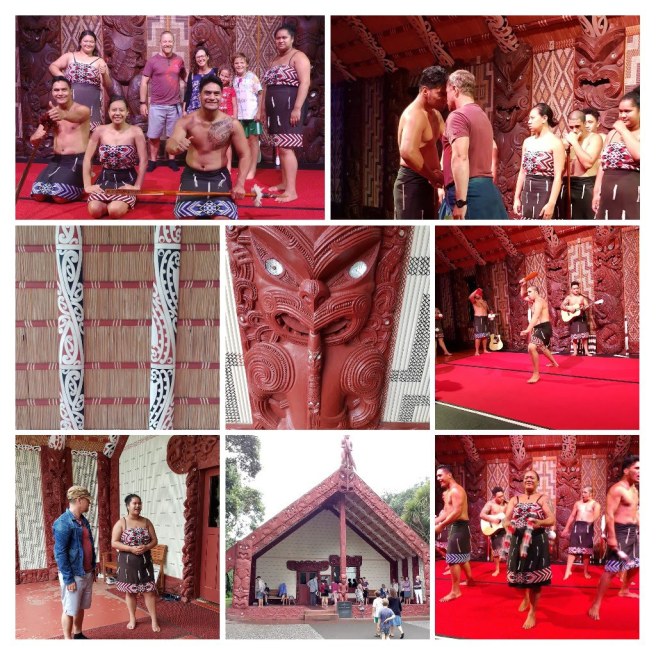 Anya: ‘So we are at the Waitangi Marae and my Dad’s the chief for the visiting tribe which is us. He gets the peace offering. I like how they put appreciation into it with all the other bits of the dance. It’s creative’

 GardenofBeeden RTW